Tribal leaders say they don't sure what to anticipate from the next CFTC call.
On Thursday, the CFTC will finally tell gaming tribe chiefs something about problems with prediction markets.
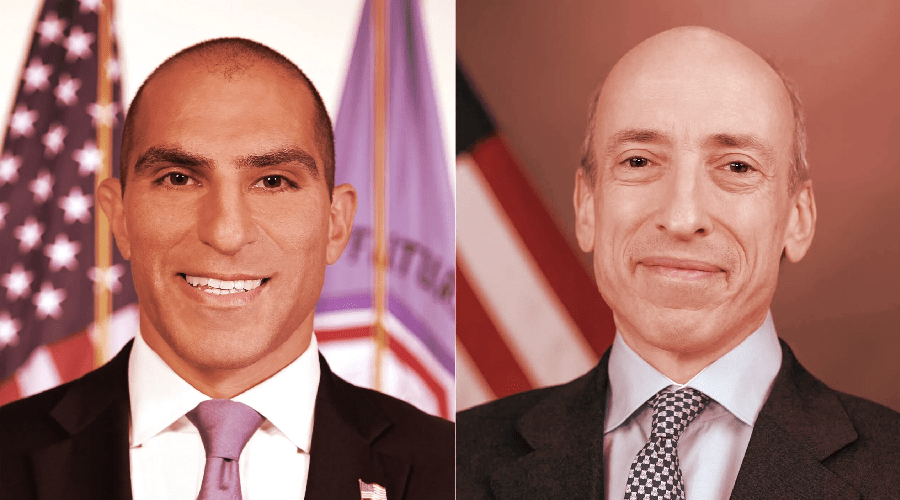
On Thursday, Caroline Pham, acting chair of the Commodity Futures Trading Commission, will hold a virtual discussion with leaders of US tribes who are involved in gaming. The call is likely to be about contracts for sports events on prediction markets. That's basically all anyone knows thus far, even those who are involved.
Victor Rocha and Jason Giles of the Indian Gaming Association presented another webinar on Wednesday as part of their New Normal series in preparation for the call. This week, tribal lawyers Bradley Bledsoe Downes and Joseph Webster, as well as Rodney Butler, chairman of Connecticut's Mashantucket Pequot Tribal Nation, one of the largest and most powerful gambling tribes in the US, were guests.
The five people agreed that what they will hear on the teleconference on Thursday is nearly completely unknown. The CFTC had planned an all-day event with many people in Washington, DC on April 30.
There was never any public confirmation of anything regarding that meeting, not even the date. The only thing that was confirmed was that the event was cancelled ahead of time, but no reason was given. InGame's report of the new, tribal-only call earlier this month came as a surprise.
Downes said, "There hasn't been much information other than an invitation." "I think this is just a courtesy at best."
Butler: "They're breaking our promises."
Butler said some interesting things about prediction markets, especially since he is one of the most influential tribal leaders to speak out on the problem thus far. His tribe and the Mohegan Tribe have a deal with the state of Connecticut that gives them exclusive rights to gambling.
So far, the two groups have brought in billions of cash for the state. But if prediction markets keep growing, those deals and those like them in other states could be at risk.
"It's really simple: they're breaking our deals and the compacts we've worked so hard to make happen..." Butler remarked, "It just completely ignores that relationship between governments."
Connecticut has not yet been one of the several states that have sent cease-and-desist letters or sued prediction markets like Kalshi and Crypto.com. Butler said that the state attorney general and the Department of Consumer Protection are looking into the issue and will "weigh in" at some time.
"We have a very profitable deal for exclusivity in Connecticut, and many tribes have that across the country, so that will have an effect right away," he added.
Counting the points on the scoreboard
Attorneys Downes and Webster went over the present legal issues surrounding prediction markets again. Kalshi is now litigating three state cases against Nevada, New Jersey, and Maryland.
Kalshi has gotten temporary restraining orders in the first two cases, but there are appeals in the works, and the Maryland case is still in its early stages. Downes talked about the Maryland case in particular, saying it was probably the most thorough argument from lawyers and might have been made even stronger by what they learnt from decisions in other states.
Commercial interests have begun to get involved in both the Nevada and New Jersey cases. The Nevada Resort Association wants to get involved in that state's appeal, and the Casino Association of New Jersey filed an amicus brief to support its state's case. Panellists suggested this may mean that more and more people are willing to join the struggle.
Webster, who talked about legal difficulties in a previous webinar, noted again on Wednesday that "there hasn't been a tribal voice" in these cases, even in amicus briefs. He further said that the state orders have only been for temporary injunctive relief.
He noted that "none of the courts have made full decisions on the merits yet."
The CFTC in the spotlight
On Wednesday, the panellists spent time looking at the CFTC, a federal organisation that might be gaining more attention than it ever has because of prediction markets. In the past, the commodities and derivatives markets were small and mostly related to farming. Rocha made a joke about the commission, calling it the "orange juice police."
It is worrying that the CFTC might suddenly become the de facto national sports betting regulator, even for the commission itself. When the commission was appealing election betting during the Biden administration, they said they didn't want to have to watch over these new markets. This year, the appeal was discontinued when Donald Trump became president.
Downes remarked, "I don't think anyone ever thought there would be sports betting under the guise of prediction markets."
Downes also talked about the self-certification approach, which lets prediction markets offer contracts without getting permission first. Instead, the CFTC either asks markets to be delisted or does nothing. Downes said that exchangers like Kalshi are "emboldened" and "abusing" this mechanism.
The CFTC is also going through a lot of changes, just like many other government agencies do when a new administration takes over. Recently, a lot of people have quit the commission, including Pham, who will leave when Brian Quintenz is confirmed as the new head. There is a potential that only one commissioner will be in place when there should be five in the next few months.
Kalshi not hiding
Kalshi is definitely not flying under the radar as things unfold. Kyle Langford, who is running for governor of California, released a video on X on Saturday showing him buying $100 worth of contracts on himself to win the 2026 election.
This brought up a lot of questions about honesty and interfering with elections. A Kalshi rep posted the following on the messaging app Discord in response:
"We know about the situation that was recently made public in which a candidate traded on a market about their candidature, and our compliance and surveillance teams are taking the appropriate steps." Kalshi looks into and punishes any possible violations of its Rules, which can be found at https://kalshi.com/regulatory/rulebook. This is something that all CFTC-regulated exchanges must do.
"Kalshi does not talk to the public about the status of ongoing investigations." Exchange notice may make public the results of such an inquiry or any subsequent notice of charges or suspension.
Last week, Kalshi CEO Tarek Mansour made significant news in the financial press when he said at a conference in New York that "most mainstream financial brokers, where you have your 401(k), will have Kalshi markets available within app." This supports prediction markets' claim that sports contracts are a valid economic tool.
Earlier this month, Kalshi made the strange declaration that they were working with Elon Musk's xAI, but then took it back the same day.
Mansour added in a post that has since been deleted, "No one has fought for the truth harder than Elon Musk." "He has motivated me at every turn. I am really happy to say that Kalshi will be working with xAI to make prediction markets more popular. We will work together to make the future of news and information.