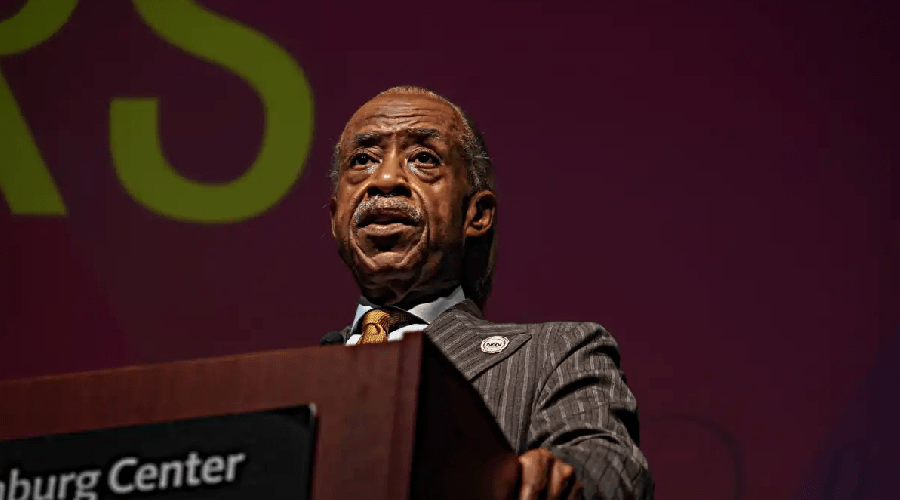
At the first CAC hearing, Jay-Z talks about the Caesars Times Square proposal.
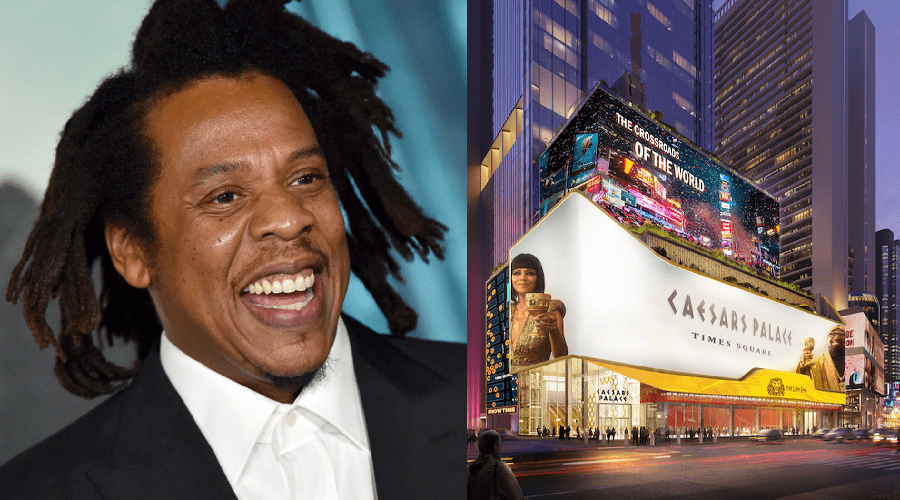
Caesars expects that the celebrity's weight will help them get a licence in New York.
Shawn Carter, also known as Jay-Z, is a rapper and businessman who has sold millions of records, played at some of the most famous places in the world, and married Beyonce.
But on Wednesday, the billionaire businessman threw another big show. He didn't look fancy in a suit and was crammed into a plain meeting room.
Jay-Z's Roc Nation firm is working with SL Green and Caesars Entertainment to get one of three downstate New York casino licenses for the Caesars Palace Times Square (CPTS) project. There were people there from the project for the inaugural meeting of the community advisory group.
Jay-Z seemed shy and even nervous as he talked, which is very different from how he usually acts in Brooklyn.
"I'm trying to hold back—it's a very good idea," Jay-Z remarked quietly as he looked for the proper words. "Very good alignment for us to keep our promise in Times Square."
He said that his proposal "is not coming to compete with Broadway," which is what local actors' unions and theatres have said. He added that CPTS would not take away from the industry, but rather contribute to it. He said that one of his first contacts was to Disney CEO Bob Iger to find a way to maintain 'The Lion King' musical at the location.
Jay-Z added, "In everything we've done in the past [at Roc Nation], we've always included the community."
All hail the Caesars?
Caesars is the largest name in the casino business among the eight bidders. There may only be seven bidders, though, because Bally's idea is all but dead because of zoning problems. In their presentation, Caesars bragged about having 53 hotels in North America and more than 50,000 workers. It's interesting that there are so many destination and regional casinos, since Caesars is marketing CPTS as a combination of the two.
It would be a luxury resort for tourists, but with only the most basic amenities to get them to visit local businesses. CPTS is not a new building; it is a renovation of an old office building at 1515 Broadway. It has less than 1,000 hotel rooms, only four restaurants, and no stores, making it one of the tiniest ventures still in the works. But the fact that it is in the middle of Times Square is what makes it most famous.
Brian Agnew, Caesars' senior vice president of corporate finance, said, "The Caesars brand is only for our flagship luxury properties, which is exactly how we are positioning CPTS." He went on to say that CPTS "will be on par with the quality of a destination like Caesars Palace Las Vegas," but "in a New York way."
To assist promote the community involvement aspect, Agnew said on Wednesday that Caesars will broaden its rewards program so that members may use their points at local companies. This is the first time this has happened in the industry.
Agnew added, "We are building an ecosystem where all the businesses in Times Square are involved in this project." "We just set up gaming in a converted office block, and all of the businesses next door become our partners."
"All in on this city like no one else"
SL Green is a New York specialist, while Caesars had a huge empire. As the city's biggest commercial landlord, CEO Marc Holliday said that his company "is all-in on this city like no one else." A holographic map revealed all of the company's properties in Manhattan, like something out of a Marvel movie.
Holliday stated, "You don't see any properties in Florida here." "Nothing in Texas or on the West Coast. Nothing is going on in the Southwest. In gaming terms, we don't hedge our bets when it comes to doing business in what I think to be the best city in America.
SL Green is one of numerous well-known non-gaming companies that are still trying to get a licence in New York. Some of the others are Silverstein Properties, Soloviev Group, and Thor Equities. Earlier this year, Related Companies withdrew another proposal that they had led.
For almost all of them, getting a casino licence is a one-of-a-kind chance to grow their business. Casino gambling can make a project go faster, but it also means that the bids depend on that part. Without games, most of the locations picked for these bids could not be built to the same level.
Holliday said that CPTS would "fit like a glove" and become a "contextual" element of Times Square. He also talked about being involved in the neighbourhood, noting that the property is "specifically designed to share the time of the gaming patron and hotel guest with all the Times Square and New York City has to offer."
Will Manhattan be left out?
State officials have a tough time figuring out what they want from this process because of Caesars' offer. The three licenses that are available are supposed to be given out in a way that has the most positive effects on the economy and the most tax revenue while having the least negative repercussions.
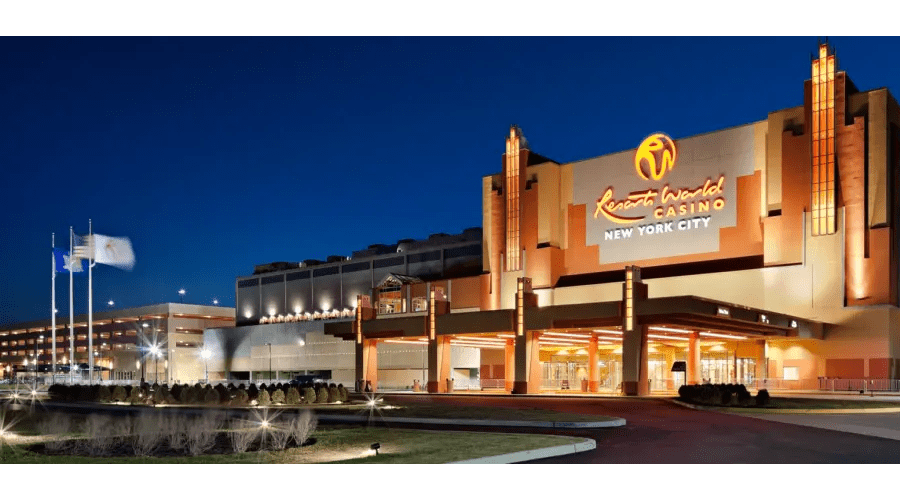
Based on that reasoning, the fact that MGM Empire City and Resorts World NYC already have racinos and bring in a lot of tax money makes them likely to win. There would only be one licence left, and three offers from Manhattan, including CPTS, have already come in. The idea of leaving out Manhattan sounds like a bad one, since it is the richest and most popular borough for tourists.
But even the diversity of proposals from Manhattan makes people wonder what the best criteria are. CPTS would be reasonably quick to launch, although it has the fewest amenities and non-gaming options. Freedom Plaza and Avenir would be bigger and include more people, but it would take longer to create them. Steve Cohen's Metropolitan Plaza in Queens, which is not in Manhattan, would be more of a typical, stand-alone tourist resort than a new part of the city.
CACs have until September 30 to vote on each proposal based on how much public support it gets. To move on to the next step, two-thirds of the votes must be in favour of each bid. By the end of the year, the New York State Gaming Commission will give out up to three licenses.